Pelvic Floor Muscles
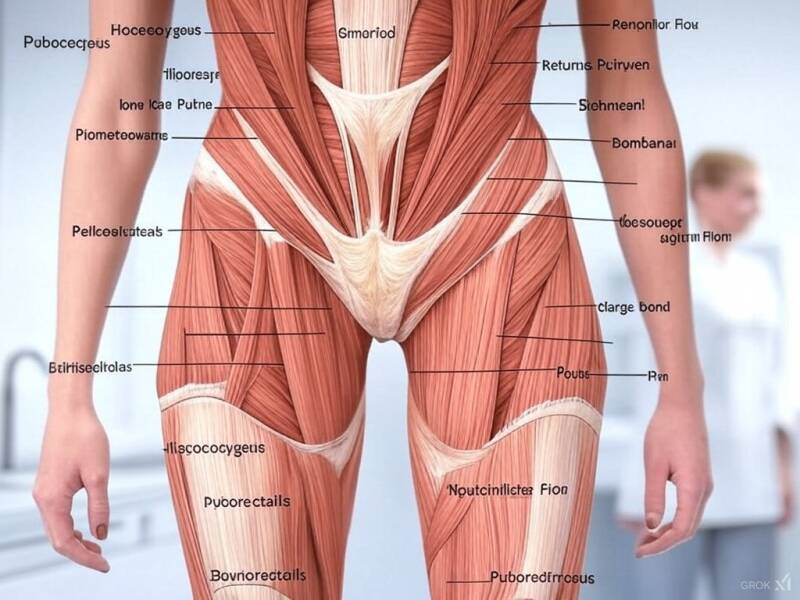
The floor of the pelvis is made up of layers of muscles and other tissues. These layers stretch like a hammock from the tailbone at the back, to the pubic bone at the front.
A woman’s pelvic floor muscles support her bladder uterus (womb) and bowel (colon). The urethra (urine tube), the vagina, and the rectum (back passage) all pass through the pelvic floor muscles. Pelvic floor muscles help control your bladder and bowel. They may also help sexual function.
Pelvic floor muscles can be made weaker by not keeping them active and maturing through adulthood.
When the pelvic floor muscles have to support heavy loads they may not be strong enough. Heavy loads press down on the pelvic floor muscles when you:
- are overweight
- push and strain to use your bowels if you are constipated
- carry heavy weights
- have a cough that goes on for a long time such as with asthma, bronchitis or a chronic cough
Women who wet themselves when they cough, sneeze or are active have stress incontinence. They will find pelvic floor muscle training can help improve this problem.
As women grow older, the pelvic floor muscles need to stay strong. After menopause, hormone changes can affect bladder control. As well as this, the pelvic floor muscles change and may get weak. A pelvic floor muscle training program can help to lessen the effects of menopause on pelvic organ support and bladder control as well as help women who have an urgent need to pass urine often.
Join our Mailing List: